NASA Launches SpaceX’s 32nd ISS Cargo Mission
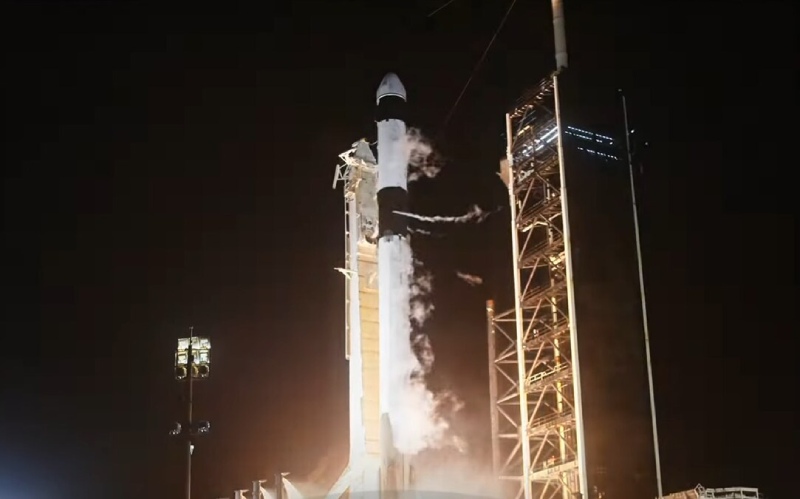
A Dragon spacecraft carrying fewer science instruments and more crew supplies than normal was launched by SpaceX to the International Space Station on April 21.
The SpX-32 Cargo Mission to the ISS is launched by Falcon 9 and is scheduled to dock on April 22
At 4:15 a.m. Eastern, a Falcon 9 took out from the Kennedy Space Center’s Launch Complex 39A, launching the SpX-32 cargo spacecraft into low Earth orbit almost ten minutes later. On April 22, the Dragon is expected to dock with the station at approximately 8:20 a.m. Eastern.
SpX-32 Mission Delivers Largest Load of Crew Supplies to ISS
To get to the station, the Dragon is transporting 3,021 kilos of cargo. SpX-32 is carrying significantly more crew supplies than previous Dragon cargo missions, weighing 1,468 kg as opposed to 961 kg on the SpX-31 trip last November and 545 kg on the SpX-30 mission in March 2024.
NASA Expands SpX-32 Crew Supplies Following the Cancellation of the NG-22 Cygnus Mission
Concerned that a Cygnus cargo spacecraft scheduled to fly the NG-22 cargo mission in June might have been damaged during shipping to the launch site, NASA said in March that it would add additional crew supplies, including as food, to SpX-32. After determining that the spacecraft’s pressurized cargo module was damaged, NASA and Northrop Grumman decided to cancel the mission in late March.
Science suffers as a result of SpX-32’s increased personnel supplies. SpX-32 carries only 255 kilograms of science inside the Dragon, compared to SpX-30’s 1,135 kilograms of pressurized cargo and SpX-31’s 917 kilograms.
SpX-32 Brings ESA Atomic Clock, Key Science Gear to ISS
Plant growth experiments, an aerosol monitor to analyze the station’s air, and medicinal payloads are among the science being sent to the station on SpX-32. The Space Test Program’s Houston 10 suite of experiments and the European Space Agency’s Atomic Clock Ensemble in Space (ACES) experiment, which studies general relativity, are among the 755 kilos of unpressurized cargo that the spacecraft is carrying in its trunk portion.


